WHY Intrexx

One reliable data foundation
Data doublication across multible systems leads errors and bad data quality. With Intrexx, you can manage your data repositories an according access policies in one central place.

Transparent data streams
Point-to-Point system connections are hard to manage and maintain. Intrexx creates one central data hub with full observability and lifecycle management.

System connectivity in seconds
Connecting SQL databases and REST APIs can cost time. Intrexx generates data models from existing APIs and connects them with a few clicks.
Data Governance:
Quickly connected. Centrally managed.
- UNIFIED SQL & REST ACCESS
Connect Your Enterprise Data Sources.
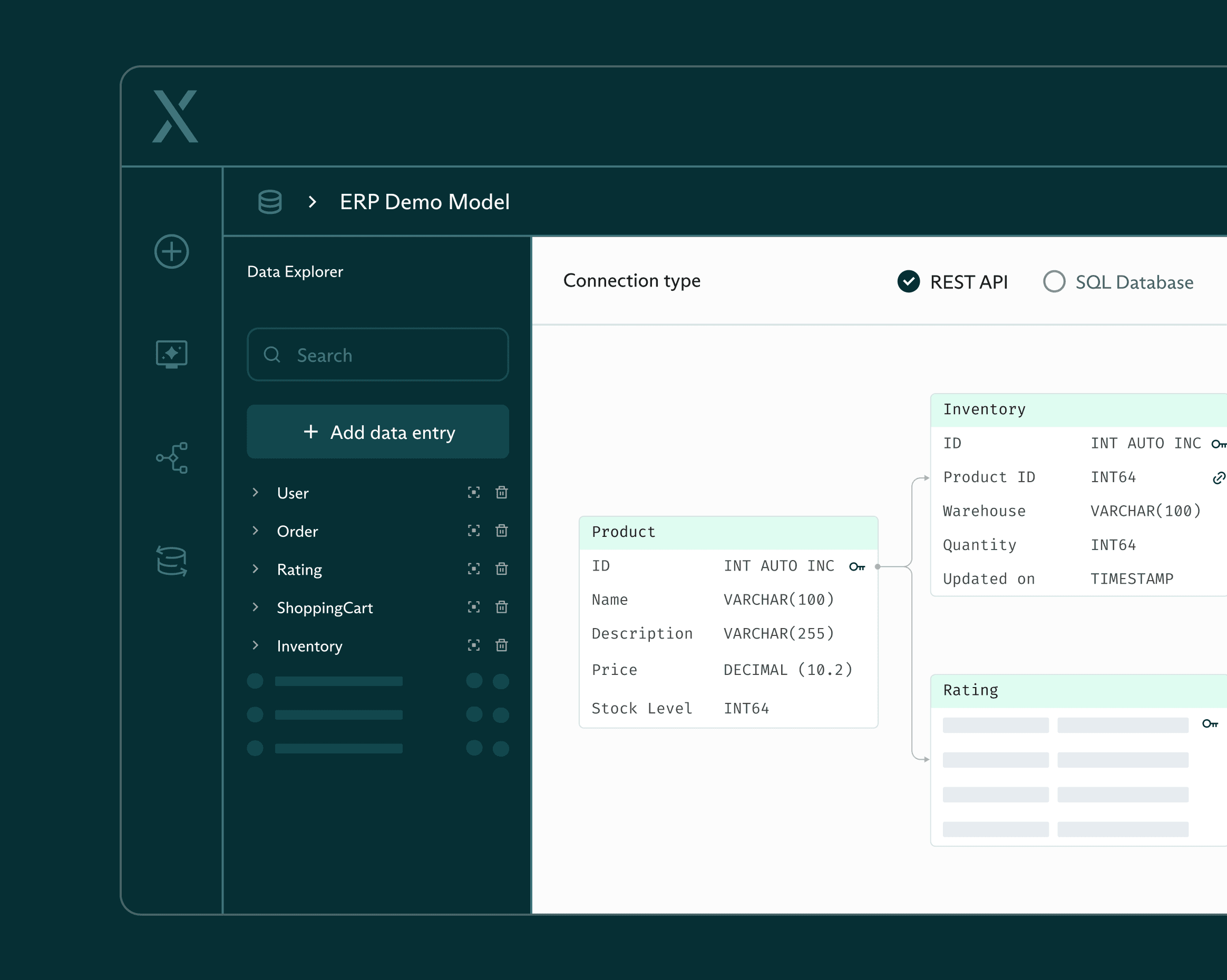
Connect your SQL databases and REST interfaces through a unified data model.

SQL Databases and REST APIs

Reverse Data engineering

Automated Operations for Data Access
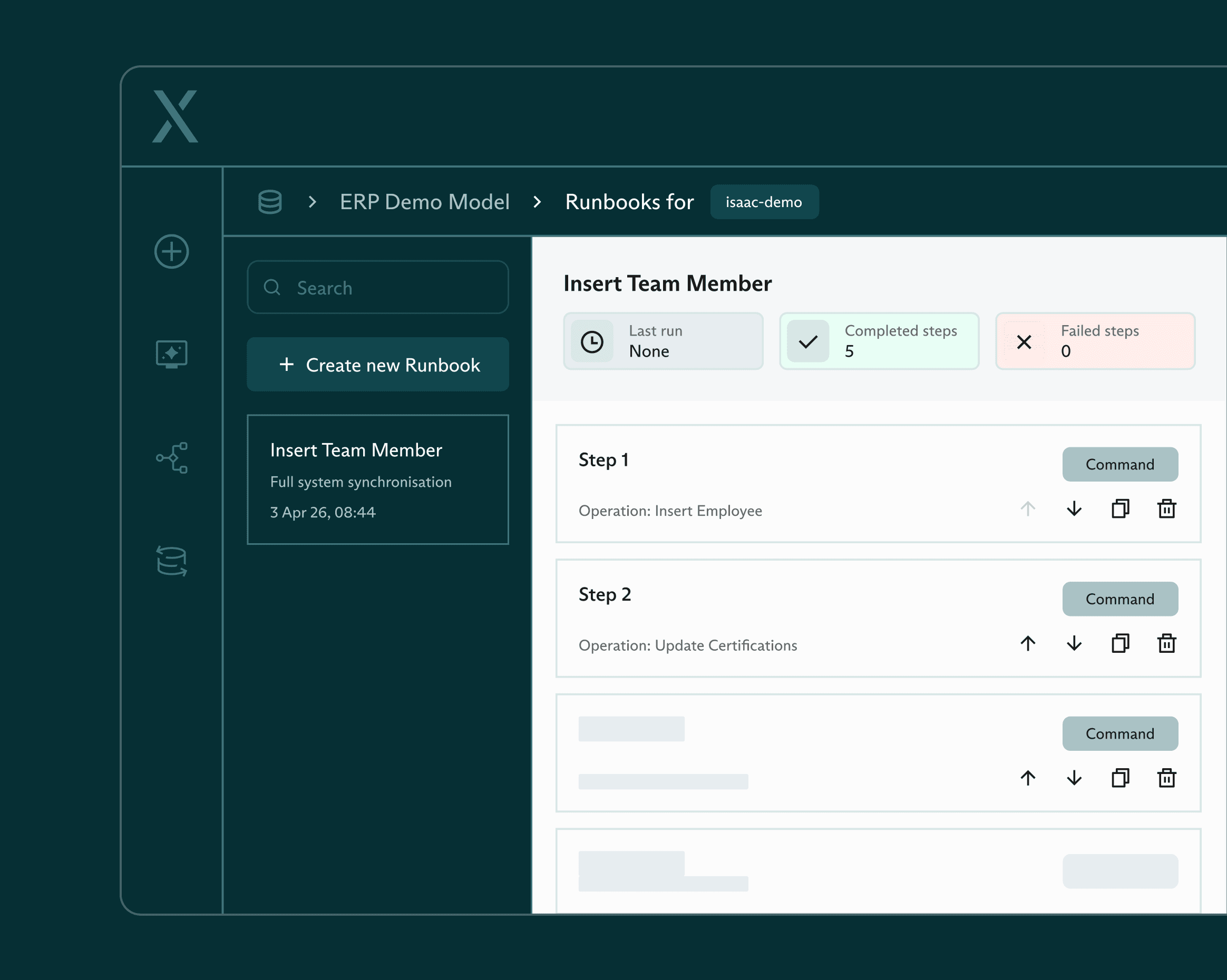
- INTEGRATED RUNBOOK AUTOMATION
Automate Your Data Operations.
Automate recurring data operations and check the quality of your data interfaces.

Runbook Automation

Preview Mode for Data Operations

Harmonization of API Endpoints
- PERMISSION MANAGEMENT
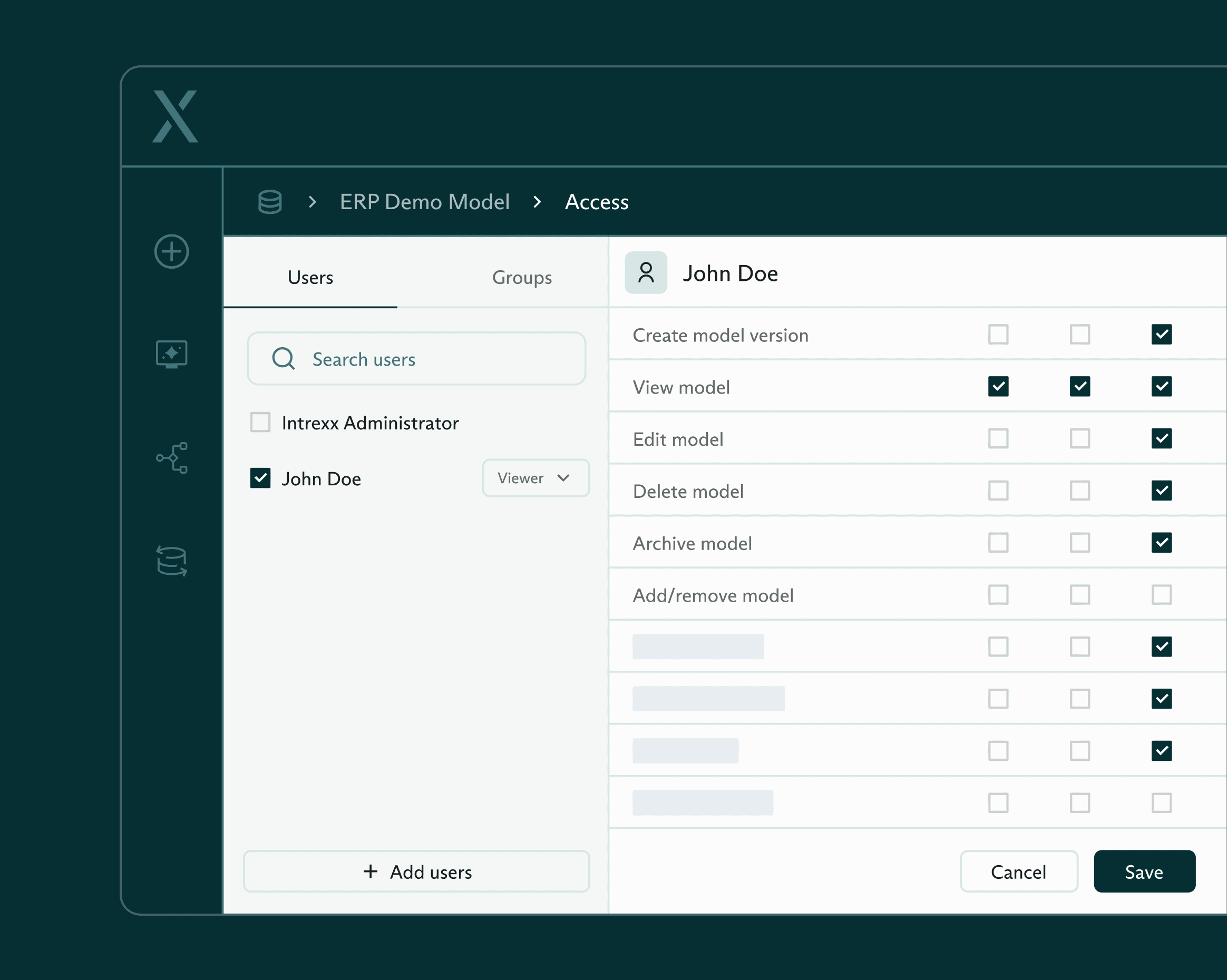
Manage Your Data Quality and Access Rights.
Control access to your data sources through a centralized permission system.

Centralized Permission System

Fine-grained Access Control

Test and Production Data
Everything You Need to Manage and Centrally Provision Your Business Data.

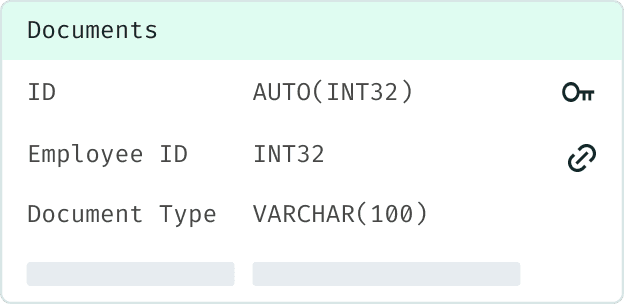
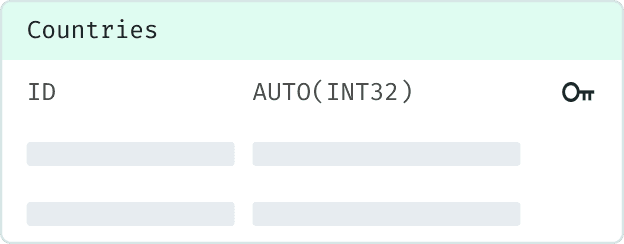
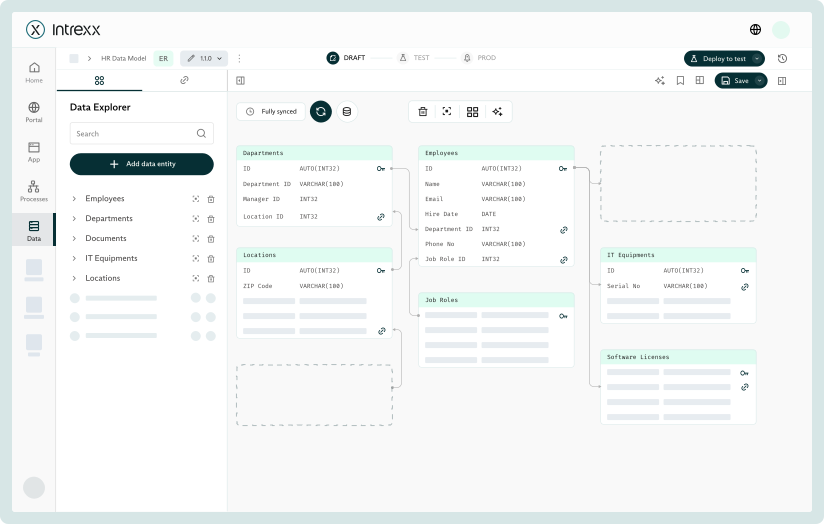
Visual Data Modeling
Create entities with just a few clicks and define relationships using drag-and-drop. The graphical interface makes even complex data models easy to understand.

Runbook Automation
Bundle multi-step data operations into reusable runbooks. Ideal for imports, data cleansing, testing, and migrations.

Isaac AI Assistant
Get AI-powered assistance for data modeling directly within the Data Builder.

Staging & Version Management
From draft to test to production, changes to the data model go through a guided approval process. Roll back to restore earlier versions at any time.

Role-Based Access Control
Protect your data models with granular, role-based permissions. Centrally manage who can view, edit, and administer data models.

Reverse Data Engineering
Automatically generate complete data models from existing OpenAPI files. Entities, attributes, and relationships are created directly from the API description.